We, representatives of mobile peoples — including indigenous, traditional, nomadic and tribal peoples[1] — and concerned researchers and practitioners gathered here in Wadi Dana, Jordan, have come together to review our situations, 20 years after the Dana Declaration[2], and to plan for our futures. We come from many different peoples and countries around the world – including Mongolia, Malaysia, India, Iran, Jordan, Sweden, Nigeria, Cameroon, Kenya, Tanzania, Namibia, and Peru. We express our thanks for the assistance from supportive UN agencies, Civil Society Organisations and Community-Based Organisations, universities, and conservation bodies, who have funded this meeting and joined us here in Jordan for this reflection.
In the spirit of the forthcoming International Year of Rangelands and Pastoralists, agreed by the UN General Assembly at the initiative of the Government of Mongolia,[3] we emphasise that we mobile peoples and pastoralists comprise hundreds of millions of people worldwide, with long-honed ways of life attuned to our local environments. Our lifeways are very varied and rely on multiple forms of mobility to enhance our relations to our environments, our territories of life.[4] Our homelands extend from the far north, through the arid and semi-arid deserts, savannahs, and steppes to the wet tropical forests.
Climate change confronts our peoples with unprecedented challenges, including land degradation, exaggerated floods and droughts, associated desertification and deforestation and loss of biodiversity that threaten our food sovereignty and security and access to fodder. These problems stem mainly from continued emissions from the use of fossil fuels, yet we are too often targeted as emitters just for continuing our traditional lifeways, while extractive industries continue unchallenged.
We call for climate mitigation measures and adaptation plans that build on our traditional mobile land management strategies and knowledge that are adapted to variability.[5] This requires that we have secure rights to our territories so the resilience that comes from our mobility is not compromised.
Contrary to common perceptions, our territories and rangelands are important reserves of biodiversity, provide essential ecosystem services, and our ways of life play a vital role in sustaining and managing these areas, while making critical contributions to national economies and food security. These mobile lifeways build in measures that increase resilience and effective soil and water management and should be the basis for the conservation and restoration of the environment. We appreciate that these values are recognised by some international agencies, such as the UN Convention to Combat Desertification.[6] Academic research substantiates our claims that mobile resource use – hunting, gathering, rotational forest fallows, transhumance and ‘nomadic’ herding and land-sharing – more often enhances rather than diminishes biodiversity and ecosystem resilience. Yet, we recognise that our environments and lifeways are under stress due to rising populations, loss of lands and waters to other interests and engagement in the cash economy, often on unfavourable terms. We call for alliances at various levels to promote and sustain our livelihoods.
Historically our ways of life and our human rights were too often depreciated and denied. Some of us experienced violence, forced displacement and sedentarisation. Laws were framed to deny us the same rights that were accorded to settled farmers. Our rights to our lands, territories, and the natural resources we depend on, to self-governance and to exercise our customary laws were not protected. In many countries today these discriminatory cultural prejudices, laws and policies endure despite our countries’ independence and their ratification of international human rights treaties and conventions.[7] We recognize the important role that land and human rights defenders play in our community and society. We urge governments and the international community to protect them in their actions for safeguarding mobile peoples and their environments.[8]
Now our lifeways face growing threats from extractive industries and agribusiness, imposed protected areas, trophy hunting and tourism camps, displacement and sedentarisation programmes, from lack of access to justice, pervasive prejudice against our ways of life, the erosion of respect for our customary governance systems and knowledge. Fragmentation and the fencing of privatised properties on our territories and new national boundaries cut cross our traditional migration routes, depriving us of access to pasture and forests. We highlight that exclusionary forms of conservation and development continue to be forced on us, leading to loss of access to our lands and territories, involuntary resettlement, impoverishment, and cultural loss. Even new ‘Green Transition’ projects – windfarms, solar farms, and mining for rare metals – are being imposed on our lands without our consent or taking account of our rights to, uses of, and needs for, these same areas.
We recognise and celebrate the model initiatives that do exist to address some of the problems we face. In some cases, the courts have ruled in favour of the restitution of our peoples’ lands. Some national governments have agreed to recognise our ownership and control of our traditional territories and allowed our self-governance. Some protected areas have been restored to community ownership, control and management, and other effective measures to achieve conservation such as indigenous territories and community conserved areas are beginning to be recognised. Some locally significant habitat restoration projects have been carried out in collaboration with our peoples. Unfortunately, while pointing the way, these examples are exceptions rather than the rule.
To address the enduring challenges that we face, we call on governments to modify their policies towards our peoples, first by recognising and formally securing our customary rights to our territories and to shared use of resources, and by recognising our traditional authorities and customary laws and encouraging culturally sensitive education that validates our ways of life and encourages youth to honour traditional knowledge and identities. Mobiles peoples should be fairly represented and have a voice in decision-making.
We call on conservationists to respect our rights and work in close collaboration with us to protect our ancestral areas and the bio-cultural diversity and ecosystems that we cherish and look after by applying our traditional knowledge and customary management practices. We remind them to implement their promises under the Durban Accord[9] and Durban Action Plan and in line with the decisions of the Conference of Parties of the Convention on Biodiversity,[10] and the relevant Key Messages of the Inter-Governmental Panel on Biodiversity and Ecosystem Services (IPBES).[11] We call on them to resource and make effective the Whakatane Mechanism and to develop agile mechanisms by which impacted peoples can raise their concerns about protected areas, have them justly and impartially adjudged and addressed through restitution, compensation and mediation.
We call on corporations to respect our peoples’ rights, to carry out fully participatory social, economic, cultural, and environmental impact assessments in line with the Akwe:kon Guidelines[12] and to only carry out their projects in our customary territories having shared full information about their proposals and obtained our Free, Prior and Informed Consent (FPIC) through procedures and from representatives of our own choosing.[13] They should provide fair compensation for loss and damages.
We call on UN agencies, Universities, CSOs and CBOs to support our efforts, act in solidarity with us and provide funding in ways that maintain our own initiatives. Specifically, we call on the UN Permanent Forum on Indigenous Issues or the Expert Mechanism on Rights of Indigenous Peoples to undertake a focused investigation and publish a report on the situation of Mobile Indigenous Peoples and make specific recommendations about how our rights should be upheld.
We also ask researchers to jointly develop collaborative research initiatives that address our priority concerns in line with our right to Free, Prior and Informed Consent and build the capacity of local researchers and youth. Such research should be independent of development and conservation agencies and validated through sharing back with our communities before being disseminated. These findings should also be made more publicly accessible.
We also pledge to undertake our own mobilisation and strengthen our networks, ensuring roles for women and youth, undertake global advocacy, act jointly and in unity to support each other in times of crisis and set up dedicated media outlets to serve our needs. We will continue to strengthen our existing local, national, and regional unions, organisations, and networks.
We offer this manifesto as an open invitation to deepen mutual understanding about the place of mobile ways of life in the future of our world and to open new avenues of collaboration among all concerned parties.
- IFAD 2009. Engagement with Indigenous Peoples Policy, IFAD, Rome
- The Dana Declaration, Dana + 10 and Dana + 20 fully endorse the implementation of the UN Declaration on the Rights of Indigenous Peoples.
- https://iyrp.info
- https://www.biodiversitya-z.org/content/indigenous-peoples-and-community-conserved-territories-and-areas-icca
- https://www.youtube.com/watch?v=DeqITzac9Ac
- https://www.unccd.int/news-stories/statements/indigenous-peoples-dialog-climate-change-biodiversity- and-desertification [unavailable]
- And other global instruments that address Indigenous Peoples’ collective rights such as UN Declaration on the Rights of Indigenous Peoples, ILO 169, and VGGT.
- UN Declaration on Human Rights Defenders
- Endorsement Dana Declaration in 5.2.7 and in the 4th World Conservation Congress in Barcelona
- CBD COP 7 Decision 28, COP 10 Decision 2, COP 12 Decision 12, COP 14 Decision 8, all with their respective annexes.
- IPBES ‘Key messages’ A6, B6 and D5 of Global Assessment.
- https://www.cbd.int/doc/publications/akwe-brochure-en.pdf
- https://www.fao.org/3/i3496e/i3496e.pdf
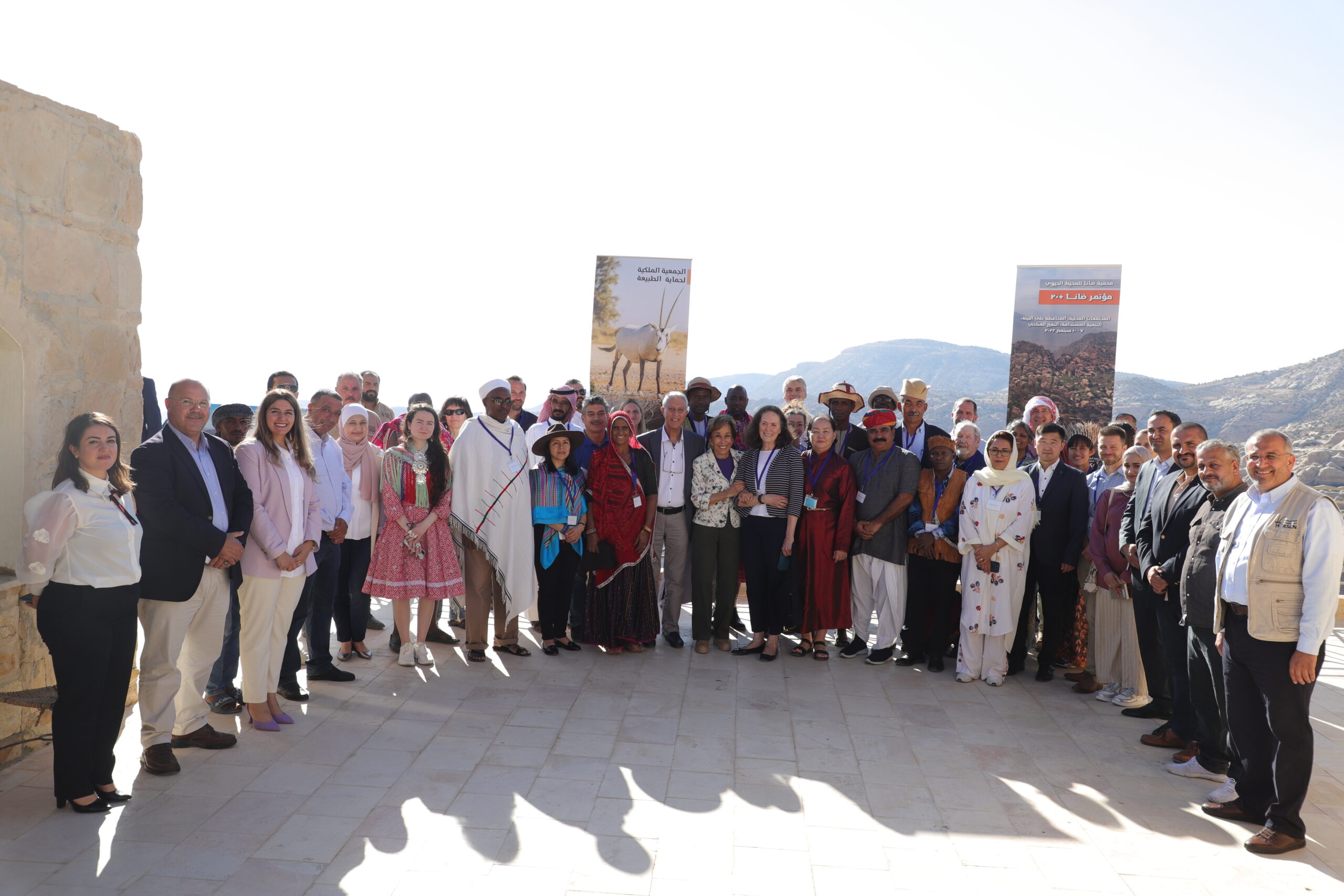
Image caption
